


T: +86-18156545248
E: info@wnksensor.com
E: info@wnksensor.com
5F, Bldg. 2A, Mingzhu Industrial Park Hefei 230000, China
Views: 0 Author: Site Editor Publish Time: 2025-12-01 Origin: Site
Generic repair guides often claim the sensor is located right next to the oil filter, leading to frustration when you pop the hood and find nothing but hoses and brackets. For decades, this advice held true, but modern engine design has shifted components into increasingly obscure locations. Locating the sensor is the non-negotiable first step in diagnosing an illuminated oil pressure warning light or resolving a P0520 diagnostic trouble code. If you cannot find the component, you cannot verify if your engine is suffering from catastrophic failure or a simple electrical glitch.
Engine engineering has evolved from simple external blocks where every sensor was accessible to integrated modules buried beneath intake manifolds. This guide covers where to find the oil pressure sensor across different vehicle generations. We will help you verify the component, distinguish it from look-alikes, and decide whether a DIY replacement is a quick Saturday fix or a multi-day project requiring advanced disassembly.
The "80/20" Rule: On 80% of older vehicles, the sensor is near the oil filter or cylinder block; on modern vehicles (post-2010), it is often buried in the engine "valley" or integrated into oil cooler assemblies.
Visual Identification: Look for a single-wire connection (older switches) vs. three-wire harnesses (modern transducers).
The "Starter Trap": On compact turbo engines (like GM 1.5L), the sensor is often hidden behind the starter motor, requiring significant disassembly.
DIY vs. Pro Decision: Accessibility dictates the repair strategy; accessible sensors are a $20/15-minute fix, while buried sensors (like the 3.6L Pentastar) require intake removal and 3+ hours of labor.
If you are working on a vehicle manufactured before 2010, or most non-turbocharged four-cylinder engines, the location is usually intuitive. Engineers historically placed these sensors in areas where pressurized oil exits the filter or travels through the main engine block galley. Start your search in these two primary locations.
The most logical place to measure hydraulic force is immediately after the filtration process. This ensures the reading reflects clean oil entering the engine bearings. On many Japanese and American 4-cylinder engines from the 1990s and 2000s, this is the default location.
You should look for a small brass or black plastic component screwed directly into the metal housing where the oil filter spins on. It will protrude perpendicularly from the housing. This location offers excellent accessibility. You can typically reach it from underneath the vehicle during an oil change or from the top if the intake tubing is removed. This accessibility makes it a prime candidate for a quick DIY repair.
Older V8 and V6 engines often tap the sensor directly into the main oil galley. This provides a reading of the pressure available to the camshafts and crankshaft. The classic example is the Chevy Small Block (SBC) engine. On these platforms, you will usually find the sensor at the rear of the engine block, near the distributor or intake manifold wall (often called the "China Wall"). Alternatively, it may be located on the side of the block, just above the oil filter mounting pad.
The side of an engine block is crowded with various sensors. A common mistake is removing the wrong component. You must distinguish the oil pressure unit from similar-looking brass sensors.
Knock Sensors: These are typically located lower on the block or in the center of the cylinder banks. They monitor vibration rather than fluid.
Coolant Temperature Sensors: These are almost always located higher up, near the cylinder head or water pump, tapping into the water jacket rather than an oil port.
Always trace the wiring harness back or verify the component sits on an oil passage before applying a wrench.
If you cannot find the sensor near the filter or on the block, you are likely dealing with a modern engine affected by downsizing and packaging constraints. As engine bays became tighter and aerodynamic requirements lowered hood lines, engineers moved sensors into "blind spots." In these scenarios, you cannot see the component without significant disassembly.
One of the most notorious locations in modern automotive repair is the "V" of the engine block, known as the valley. This is particularly common in the 3.6L Pentastar V6 engine used extensively in Dodge, Jeep, and Chrysler vehicles.
In this design, the oil pressure sensor is not a standalone unit screwed into the block. Instead, it is integrated into a plastic oil cooler and filter housing assembly. This assembly sits deep in the valley between the cylinder heads. To access it, you must remove the upper intake plenum and the lower intake manifold. You literally cannot see the sensor until the top of the engine is stripped away.
Decision Impact: This is not a simple sensor swap. The plastic housing is prone to warping and cracking, leading to massive oil leaks. If you are going this deep into the engine, standard practice is to replace the entire oil cooler assembly rather than just the sensor. It requires specific torque sequences and new intake gaskets.
Compact turbocharged engines, such as the GM 1.5L Ecotec found in the Chevy Malibu or GMC Terrain, present a different challenge. The sensor is physically attached to the block, but it is buried behind the starter motor or underneath a turbocharger heat shield.
For the GM 1.5L specifically, the sensor is located directly behind the starter. You cannot reach it from the top. The repair procedure requires lifting the vehicle, disconnecting the battery (critical to avoid welding your wrench to the frame), and removing the starter motor. Only then does the sensor become visible. What looks like a $20 part turns into a job requiring jack stands, heavy disassembly, and potential frustration with rusted exhaust bolts.
Before you commit to tearing apart your intake manifold or removing a starter, you must evaluate if the sensor is actually the problem. Misdiagnosis is common because symptoms often overlap.
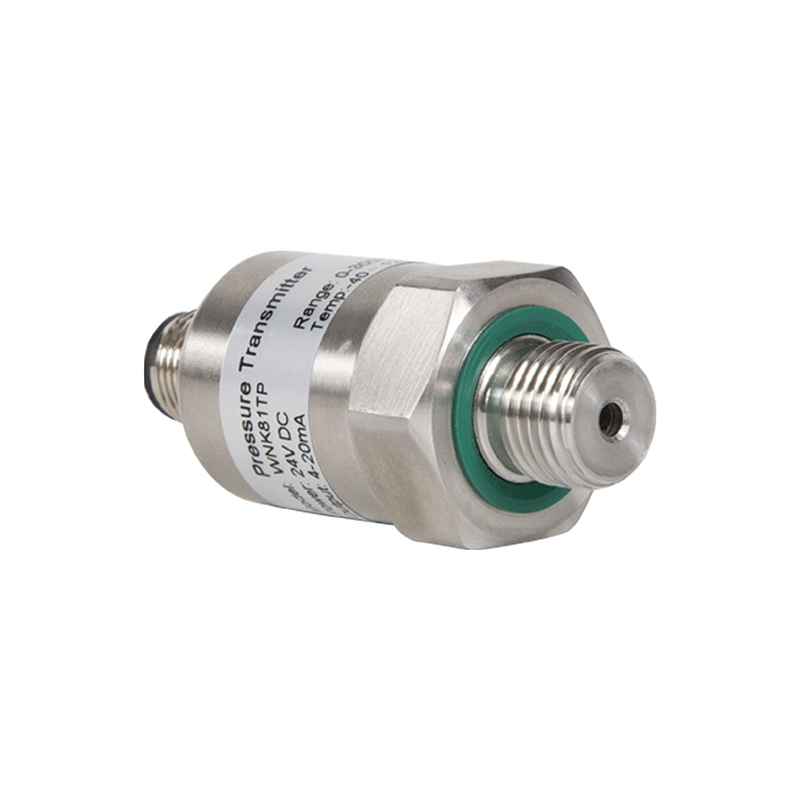
Understanding what you are looking at helps verify the part. Older vehicles use a simple switch, while modern ECUs require a sophisticated pressure sensor known as a transducer.
| Feature | Oil Pressure Switch | Oil Pressure Transducer |
|---|---|---|
| Function | On/Off signal (Dummy Light) | Variable voltage (Gauge Readout) |
| Wiring | Usually 1 wire (Grounds to block) | Usually 3 wires (5V ref, Signal, Ground) |
| Output | Light turns on below set PSI | Real-time PSI data to ECU |
A primary failure mode for these components is internal seal failure. Oil pushes through the sensor body and wicks up into the electrical connector. This conductive fluid bridges the pins, causing erratic readings or false warning lights.
Actionable Tip: Unplug the connector and inspect it. If you see oil inside the plastic plug or on the pins, the sensor seal has failed internally. Cleaning it is not enough; the sensor is physically broken and must be replaced. Conversely, if the connector is dry but the wire insulation is frayed or melted against the exhaust, the issue is likely wiring, not the sensor itself.
Professional mechanics rarely replace a difficult-to-reach sensor without verification. They attach a mechanical oil pressure gauge to the port to read the actual hydraulic pressure of the engine. If the mechanical gauge shows healthy pressure (e.g., 25-40 PSI at idle) but the dashboard reads zero, the sensor is bad. If the mechanical gauge also reads zero, you have an internal engine problem, and a new sensor will not fix it.
Warning: On engines like the Ford 5.4L 3-valve, low pressure is rarely just a sensor glitch. It often indicates failed hydraulic timing chain tensioners. Ignoring this by just swapping the sensor can lead to a jumped timing chain and destroyed valves.
Not all sensor replacements are created equal. The location dictates the total cost and the tools required. We can break this down into two distinct scenarios to help you decide if you should proceed.
If you can see the sensor when you open the hood or look up from the oil pan, this is a high-ROI DIY job.
Part Cost: $15–$40 for an OEM-quality sensor.
Labor: 0.5 hours.
Tools: Standard wrench or deep socket.
Verdict: Do it yourself. The risk is low, and the savings are immediate.
If the sensor is hidden in the engine valley or behind a starter, the calculation changes. You are paying for labor time, not the part.
Part Cost: $40–$250. (The higher cost applies if you must replace the full oil cooler assembly, as recommended for 3.6L Pentastar engines).
Labor: 3–5 hours of professional labor time.
Risk: High. You risk cracking brittle plastic intake manifolds, dropping bolts into intake ports, or snapping aging connector clips.
Verdict: Evaluate your tool collection. Do you have a torque wrench? Do you have a safe way to lift the car? If not, the risk of causing collateral damage often outweighs the labor savings.
When dealing with buried sensors, efficient mechanics replace related components to prevent future teardowns. For example, if you remove the intake manifold on a Jeep Wrangler to reach the sensor, you should replace the spark plugs and ignition coils for the cylinder bank covered by the manifold. Similarly, if the sensor is part of an oil cooler assembly, replace the entire unit. Changing only the $40 sensor and reusing a 10-year-old plastic housing often results in a coolant or oil leak weeks later, forcing you to repeat the entire 4-hour job.
Successful replacement requires the right approach to avoid damaging the new part or the engine block.
Standard sockets often fail here. Oil pressure sensors typically have a unique shape—rounded tops with hex bases—that prevents a standard shallow socket from gripping them. A deep socket may work, but a dedicated Oil Pressure Sensor Socket is safer. These specialty sockets have thinner walls to fit in tight spaces and internal clearance for the sensor’s plastic connector.
In extremely tight spaces, such as near the firewall on a V6, a ratchet head simply won't fit. A Crow’s Foot Wrench is essential here. It attaches to the end of an extension bar, allowing you to turn the sensor from a distance without swinging a handle in a cramped area.
Thread sealing causes confusion for many DIYers. You must identify the thread type:
Tapered Threads (NPT): These rely on the threads deforming slightly to create a seal. They usually require a small amount of thread sealant or PTFE tape. However, maintain a conductive path if it is a single-wire grounding switch.
Straight Threads with O-Rings: Many modern sensors use a rubber O-ring or crush washer to seal against the block. Do not use tape on these threads. The tape can prevent the O-ring from seating continuously, causing a leak.
Torque Warning: Engine blocks are cast iron or aluminum, while sensors are often brass or plastic. It is incredibly easy to overtighten the sensor and snap it off inside the block, creating a nightmare scenario. Always use a torque wrench and adhere to the manufacturer's low torque specifications (often only 10–15 ft-lbs).
Locating the oil pressure sensor is rarely a uniform process; it depends heavily on the engine's age and displacement. While older vehicles offered easy access near the oil filter, modern engineering often buries this critical component beneath intake manifolds or behind starter motors.
Your repair strategy should be dictated by the location. If the sensor is visible, swapping it is a standard maintenance task. If it is buried, do not guess. Verify the oil pressure with a mechanical gauge first to ensure the labor is justified. Finally, always perform a safety check immediately after startup. Look for oil weeping around the new threads before driving, as a high-pressure leak can drain an engine in minutes.
A: It depends on the root cause. If the issue is strictly a failed sensor (verified by a mechanical gauge), you can drive the car short distances, though it is risky because you have no warning system. However, if the sensor is working correctly and the oil pressure is actually low, driving the vehicle will destroy the engine bearings and cams in minutes. Do not drive until you verify if it is a sensor error or a mechanical failure.
A: A failing oil pump or worn bearings typically produces audible symptoms, such as ticking, knocking, or clattering noises that get louder as the engine warms up. A bad sensor usually triggers a light or erratic gauge movement without any strange engine noises. Additionally, sensors often fail to "maximum" or "zero" instantly, whereas mechanical pressure loss often fluctuates with RPM or temperature.
A: No, there is rarely a dedicated fuse solely for the oil pressure sensor. The sensor circuit is usually part of a larger cluster or engine management circuit. If a fuse blows, you would likely lose multiple gauges or dashboard functions, not just the oil pressure reading. The failure is almost always the sensor itself, the wiring pigtail, or the connector.
A: This usually indicates you have the wrong part or a "universal" part that requires an adapter harness. OEM changes are common; manufacturers might switch from a 1-wire switch to a 3-wire transducer mid-production year. Always verify the VIN when ordering. If the new sensor has three pins but your harness has one, the parts are incompatible and will not function.


