


T: +86-18156545248
E: info@wnksensor.com
E: info@wnksensor.com
5F, Bldg. 2A, Mingzhu Industrial Park Hefei 230000, China
Views: 0 Author: Site Editor Publish Time: 2025-10-17 Origin: Site
A prsssure sensor allows you to measure the amount of force applied to a surface, such as when you press a button with your finger. This device converts the force into an electrical signal that can be easily read. You’ll find a prsssure sensor in car tires, coffee machines, and fitness trackers that count your steps. Prsssure sensor technology plays a crucial role in maintaining safe water levels in tanks and assists doctors with medical instruments. The global market for prsssure sensor devices is expanding rapidly as demand grows for safety, health, and comfort solutions. Choosing the right prsssure sensor is essential, as each application requires the most suitable option for optimal performance.
Pressure sensors check force and turn it into an electrical signal. People use them in cars, medical tools, and water systems.
There are different pressure sensors like absolute, gauge, and differential sensors. Each one works for a special job, so pick the right one for your needs.
Always look at the calibration and certification of your pressure sensor. This helps you get correct and steady readings. Good readings are important for safety and how things work.
Think about things like temperature and humidity when you pick a pressure sensor. Some sensors work better in tough places than others.
It is important to know the difference between a pressure sensor and a pressure transducer. Sensors check pressure, but transducers change that into a signal you can use.
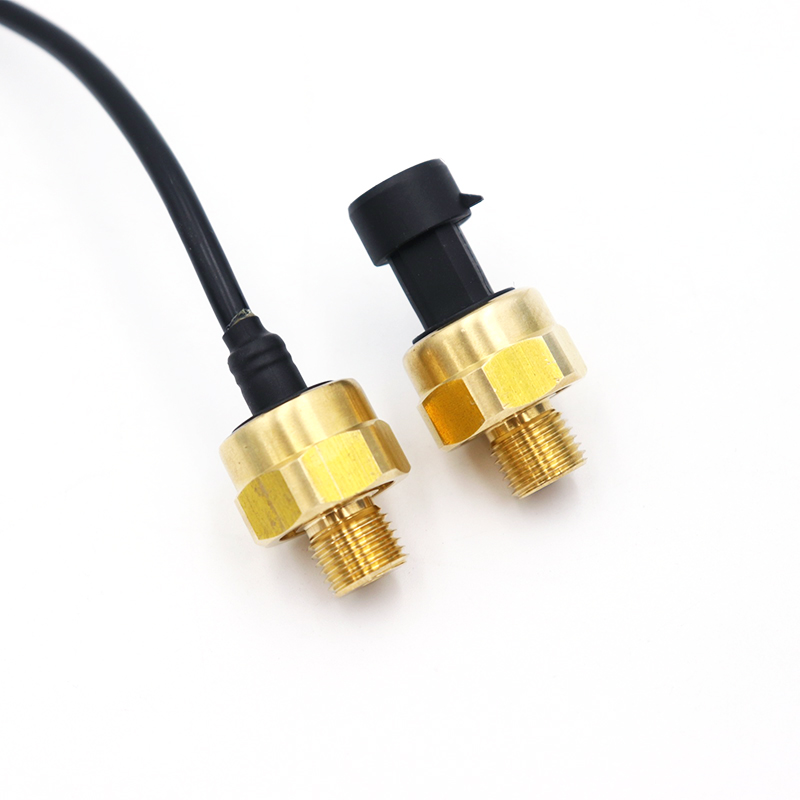
Think of a pressure sensor like a button you press. It has a special part that feels force on its surface. When you push it, the sensor checks how much pressure you use. This happens in things like car tires and water tanks.
The sensor feels the pressure you put on it.
It shows changes as an electronic signal.
There are different ways to measure pressure. Some sensors use strain gauges. These change resistance when stretched or squeezed. Others use solid-state parts or thin films. These react to pressure but do not move. Here is a table that explains how each sensor type works:
Sensor Type | Operating Principle |
|---|---|
Strain Gauge | Measures resistance changes when force bends or stretches it. |
Solid State | Uses special materials to sense pressure without moving. |
Thin Film | Has resistive parts that change resistance when pressed. |
At Hefei Wnk Smart Technology Co., Ltd., we make sensors like the WNK55 Pressure Transmitter and WNK805 Pressure Transmitter. These use advanced pressure sensing parts. They give accurate pressure readings for oil, gas, and water systems.
When you press the sensor, it turns force into electricity. This uses electromechanical ideas. Piezoelectric materials like PVDF make electricity when squeezed. The amount of electricity matches the pressure you use.
Pressure sensors have different ways to send signals. Some give millivolt signals that change with pressure. Others use current signals, like 4~20mA, which are common in factories. Some sensors send frequency or digital signals for better accuracy and easy computer use.
Here is a table that shows signal types and what they do:
Output Signal Type | Description | Applications |
|---|---|---|
Millivolt output | Changes with pressure; very stable and repeatable. | Used for precise measurements. |
Current output | Sends 010mA or 420mA signals; matches pressure. | Used in factory control systems. |
Frequency output | Sends a square wave; changes with pressure; resists interference. | Used for high precision. |
Digital output | Sends digital signals (RS485, CAN, Hart); very accurate. | Needs special computer connections. |
Our WNK805 Pressure Transmitter uses a strong oil-filled silicon core. It changes the sensor’s millivolt signal into voltage, current, or digital signals. This makes it easy to connect to computers or control systems.
You can check pressure in many ways. These methods help you make sure your sensor is correct. Here is a table that explains popular ways to measure pressure:
Method | Description |
|---|---|
Comparison Method | Checks sensor output against a known standard for accuracy. |
Calibration Certificates | Shows how the sensor works at different pressures. |
Static Accuracy Test | Checks sensor accuracy when pressure stays the same. |
Dynamic Accuracy Test | Tests how the sensor reacts to changing pressures. |
Hysteresis Test | Measures differences when pressure goes up or down. |
Repeatability Test | Checks if the sensor gives the same results each time. |
Linearity Test | Tests if the sensor’s output matches pressure changes in a straight line. |
Temperature Testing | Checks accuracy when temperature changes. |
Certification Compliance | Shows if the sensor meets industry rules for accuracy. |
Things like temperature and humidity can change how well a sensor works. For example, temperature can make the sensor more or less sensitive. Humidity can also affect how it works. Our WNK81ma Pressure Sensor works well even in tough conditions. It has strong anti-interference and high accuracy.
You can pick different pressure sensors for your needs. Absolute pressure sensors measure against a vacuum. Gauge pressure sensors measure against the air around us. Differential pressure sensors compare two pressure points. At Hefei Wnk Smart Technology Co., Ltd., we have many products. These include Oil Pressure Sensor, Automotive Pressure Sensor, IOT Pressure Sensor, Hydraulic Pressure Sensor, and Water Level Sensor. You can find the best sensor for your job.
Tip: Always check your pressure sensor’s calibration and certification. This helps you get accurate and reliable pressure readings.
You see many kinds of pressure sensors every day. Each kind is best for certain jobs. At Hefei Wnk Smart Technology Co., Ltd., we have many sensors. These work for cars, oil, IOT, hydraulic, gas, and water level jobs. Let’s see the main types and how you can use them.
Absolute pressure sensors check pressure against a perfect vacuum. You use these when you need very exact numbers. They are in smart watches, food packages, and car engines. Our automotive pressure sensors, like the WNK125P, help engines work better by watching manifold pressure.
Characteristic/Application | Description |
|---|---|
Output Signal | Voltage (0–10V) or current (4–20mA) |
Industrial Compatibility | Works with PLCs and industrial networks |
Altimetry | Used in smart watches and navigation |
Automotive Use | Manifold absolute pressure sensors |
Food Packaging | Maintains package shelf life |
High-Pressure Measurement | Measures over 300 bar (4400 PSI) |
Thick-film-on-ceramic sensors save money for factories.
Piezoresistive sensors give very accurate results.
Gauge pressure sensors check pressure against the air around you. You use them in HVAC, medical tools, and checking the environment. Our oil pressure sensors and water level sensors are good for these jobs.
Simple to set up and use.
Good for measuring pressure compared to air.
Works with many data systems.
Differential pressure sensors compare pressure at two places. You use them to watch filters, control air, and keep machines safe. Our differential pressure transmitters help you find problems early and keep things working well.
Gives quick feedback for better work.
Very accurate and steady.
Helps machines last longer and saves money.
Some jobs need special sensors. We have MEMS pressure sensors for air flow and leaks, vacuum sensors for medical and chip making, and high-end sensors for deep-sea and fuel injection.
Type of Pressure Sensor | Application Examples |
|---|---|
MEMS Pressure Sensors | Air flow, room pressurization, leak detection |
Vacuum Pressure Sensors | Composite molding, medical, semiconductor |
High-end Pressure Sensors | Fuel injection, ventilators, TPMS, deep-sea exploration |
You can pick from many pressure sensors for your needs. Our products cover everything from cars to water level checks. This makes it easy to find the right sensor.
Tip: Pick the sensor that matches your job for the best results.
Pressure sensors are important in many places. You find them in factories, cars, hospitals, and water systems. Each job uses pressure sensors to make things safer and better. Let’s see how pressure sensors help in different areas.
Pressure sensors help machines work well. They control pumps, compressors, and valves. These sensors keep systems at the right pressure. This saves energy and lowers costs. In factories, pressure sensors find problems early. This stops machines from breaking down. Our WNK55 and WNK805 Pressure Transmitters work great here. They give clear and steady readings.
Pressure sensors help save energy in HVAC systems.
They make smart buildings more comfortable and efficient.
You find them in aerospace and defense for tough jobs.
Tip: Watching pressure in real time keeps things safe and working well.
Pressure sensors make cars safer and better. You see them in engines, brakes, airbags, and fuel systems. Our WNK125P Automobile Pressure Sensor helps control engines and pollution. Here is a table that shows how pressure sensors help cars:
Application | Description |
|---|---|
Leak Detection | Checks for leaks and warns you. |
Airbag Deployment | Senses quick pressure changes to open airbags fast. |
Bumper Deformation | Feels impacts and starts safety systems. |
Brake System Monitoring | Measures brake pressure to stop problems. |
Emissions Control | Changes pressure to lower pollution. |
Fuel Efficiency | Controls fuel for better gas mileage. |
Pressure sensors make cars safer and cleaner.
Pressure sensors help doctors and nurses care for people. You find them in blood pressure monitors, catheters, dialysis machines, and surgery tools. Our WNK81ma Pressure Sensor is very accurate and quick. It helps watch patients and find problems.
Catheters check blood and brain pressure.
Dialysis machines use sensors to control fluids.
Ablation machines watch pressure for safe use.
Surgery tools find problems during operations.
Doctors trust pressure sensors for important jobs.
Pressure sensors help you take care of water. You use them for floods, farming, cleaning water, and checking pipes. Our WNK8010 Water Level Sensor gives steady and clear readings. Here is a table with common uses:
Application | Description |
|---|---|
Flood Monitoring | Checks river and lake levels to warn about floods. |
Irrigation Control | Watches water levels to give the right amount and stop waste. |
Wastewater Treatment | Tracks cleaning and air for good water treatment. |
Pipeline Monitoring | Finds leaks or blocks so you can fix them fast. |
Pressure sensors help protect nature and save water.
Note: Pressure sensors work well in many jobs. You can pick the best sensor for your needs from our many choices.
You want your pressure sensor to work well and last. First, check some important things:
Accuracy: Pick sensors with clear zero and span offsets. This helps you get good readings.
Calibration Range: Make sure the sensor can measure the pressure you need. This helps stop mistakes.
Temperature Effects: Choose sensors that stay correct when it gets hot or cold.
Frequency Response: If you need to measure quick changes, pick a sensor with high frequency response.
Repeatability: Good sensors give the same results every time.
Media Compatibility: Pick sensors that work with the liquids or gases you use.
Certification: Sensors should meet safety and industry rules.
At Hefei Wnk Smart Technology Co., Ltd., we offer custom sensors. You can ask for oil pressure sensors, automotive pressure sensors, or water level sensors. We help you find the right product for your needs.
Tip: Always check if the sensor has calibration certificates and meets your local safety rules.
You need to match the sensor type to your job for the best results. For example, if you work with fast machines, pick a sensor with high frequency response and repeatability. If you measure human body pressures, choose sensors that fit body shapes and give steady readings.
Use tactile sensors for jobs that need shape matching and quick feedback.
Pick sensors made for delicate jobs, like medical devices or robot hands.
Choose water level sensors for flood watching or irrigation control.
We design sensors for many uses, like factories, cars, and hospitals. Our team can help you pick the best sensor for your job.
Here is a table that shows mistakes people make and how they affect your system:
Mistake | Impact on System Performance |
|---|---|
Neglecting accuracy | Safety problems and wrong readings |
Ignoring response time | Missed quick changes and delays |
Output signal selection errors | Loss of important data |
Mounting and size constraints | Installation problems and extra costs |
Media compatibility issues | Sensor failure or wrong readings |
Certification and safety standards | Safety risks and rule violations |
You can avoid these problems by checking sensor specs, installation needs, and media compatibility before you buy.
Note: We give strong after-sales support, including fast delivery, installation help, and technical guidance. Our team is ready to help you with repairs or replacements if needed.
You might wonder how a sensor is different from a transducer. A pressure sensor is the part that feels pressure right away. It reacts when you push on it or when air presses against it. The sensor turns this force into an electrical signal. You see pressure sensors in things that measure and show pressure, like tire gauges or water level monitors.
A pressure transducer does a little more. It senses pressure and also changes it into a certain output signal, like voltage or millivolt. This makes it easier for computers and control systems to use the data. The pressure transducer usually has extra electronics to help make the signal more accurate and steady.
It is important to know the main differences between these devices. Here is a simple table to help you see how they are not the same:
Feature | Pressure Sensor | Pressure Transducer |
|---|---|---|
Main Function | Senses and measures pressure | Converts pressure to output signal |
Output Type | Often 4-20mA signal | Often millivolt or voltage signal |
Application | Direct measurement, real-time data | Remote monitoring, control systems |
Signal Conditioning | Basic | Integrated for better accuracy |
Pressure sensors give you pressure readings right away. You use them when you need to see pressure fast, like in cars or airplanes.
Pressure transducers help send pressure data to computers or networks. You find them in factories, where watching from far away is important.
Sometimes people use "pressure sensor" and "pressure transducer" to mean the same thing. But a pressure sensor is the basic part, and a pressure transducer has extra parts for signal processing.
At Hefei Wnk Smart Technology Co., Ltd., you can pick from both types. For example, our pressure transmitter has the sensing part and smart electronics. It gives you steady and correct output for many jobs.
Tip: When you choose a device, think about if you only need a simple pressure reading or a signal for a control system. This helps you get the right product for your job.
You now know how pressure sensors work. Picking the right sensor is important. Each sensor type has special benefits. Some respond very fast. Some block noise well. Look at the table below to compare them:
Sensor Type | Response Time | Temperature Range |
|---|---|---|
Piezoelectric | 1 microsecond | -20°C to +80°C |
Capacitive | 500 microseconds | -30°C to +100°C |
Piezoresistive | Varies | -40°C to +125°C |
Choosing the best sensor helps your system work better. You get real-time checks and can fix problems early. This saves money. WNK makes strong products and checks quality closely. They help customers all over the world. Pick the right sensor to keep things safe and working well.
A pressure sensor measures force in air, liquids, or gases. You see these sensors in cars and factories. They are also in medical devices and water systems. Pressure sensors help keep things safe. They make sure things work well.
First, think about what you need the sensor for. Check the pressure range and type of material. Look for sensors that are accurate and repeatable. Make sure they have the right certification. You can ask Hefei Wnk Smart Technology Co., Ltd. for help.
Many pressure sensors work in tough places. Our sensors handle high heat and humidity. They resist strong interference. You get good readings even when conditions are hard.
A pressure sensor detects force and makes a signal. A pressure transducer changes that signal to voltage or current. This helps control systems use the data.
Clean the sensor often. Check its calibration and look for damage. Follow the instructions from the manufacturer. Contact our support team if you need help or repairs.


