T: +86-18156545248
E: info@wnksensor.com
E: info@wnksensor.com
5F, Bldg. 2A, Mingzhu Industrial Park Hefei 230000, China
Views: 0 Author: Site Editor Publish Time: 2026-05-20 Origin: Site
Selecting the right sensing element often forces engineers into a tough corner. You must balance the extreme sensitivity of semiconductor materials against the rugged durability of rigid alumina. This primary engineering dilemma dictates overall system reliability. Generally, "silicon" refers to diffused piezoresistive components. "Ceramic" covers thick-film and capacitive variants. Making the wrong choice severely impacts long-term drift stability. It increases system maintenance costs unnecessarily. It also risks catastrophic failure in harsh media environments.
In this guide, we explore the mechanical differences between these leading technologies. You will learn how to evaluate sensitivity, thermal drift, and media compatibility accurately. Understanding these parameters ensures better product design. Finally, we provide a clear application matrix. This helps you select the exact component your engineering project demands.
Silicon: Offers superior sensitivity and responsiveness (ideal for micro-pressure and low-voltage applications) but requires complex temperature compensation and fluid-filled isolation for harsh media.
Ceramic: Provides a naturally rigid, "dry" measurement environment without transmission fluids, making it inherently resistant to corrosion, high temperatures, and mechanical fatigue.
Application Rule of Thumb: Specify silicon for medical devices, HVAC, and clean air/gas; specify ceramic for aggressive chemicals, heavy hydraulics, and hygienic food processing.
Engineers must understand the underlying physics before evaluating performance metrics. The fundamental mechanics of each material dictate its operational vulnerabilities.
A standard Piezoresistive Pressure Transducer leverages the specific properties of semiconductor materials. The process media physically deflects a thin diaphragm. This deflection changes the electrical resistance across an embedded Wheatstone bridge. The system then translates this resistance change into a readable signal.
However, implementation carries inherent system risks. Bare silicon dies remain highly vulnerable to moisture and corrosion. To survive industrial applications, manufacturers enclose the silicon inside a stainless-steel isolation diaphragm. They fill the internal cavity using a transmission fluid, typically silicone oil. The oil transfers external pressure to the fragile silicon chip. This design introduces a significant risk. If the thin metal diaphragm ruptures, oil leaks directly into the process media. This ruins product batches and contaminates clean systems.
Ceramic cells utilize a high-purity alumina diaphragm. Most industrial designs use 96% to 99% pure alumina, or even sapphire for extreme scenarios. The sensing resistors are printed directly onto the rigid ceramic substrate.
This design functions entirely as a "dry cell." There is no internal fill fluid. This effectively mitigates severe implementation risks. If a massive overpressure event shatters the ceramic diaphragm, no oil enters the system. The material naturally resists chemical degradation. It eliminates the need for complex isolation membranes. This simplifies the mechanical assembly and drastically reduces contamination risks.
Evaluating raw performance requires looking beyond basic accuracy. You must consider how each material behaves under thermal stress and over extended operational timelines.
Silicon holds a clear advantage in raw sensitivity. Diffused silicon possesses a substantially higher gauge factor compared to ceramic materials. A higher gauge factor means the material generates a stronger electrical signal for a given mechanical strain. This makes silicon the default choice for highly sensitive micro-pressure applications. Medical ventilators and cleanroom draft monitors rely heavily on silicon elements to detect minute air fluctuations.
Temperature shifts heavily impact semiconductor materials. Silicon exhibits inherent temperature drift. Heating or cooling the sensor alters its zero-point and span output. Consequently, a piezoresistive silicon cell requires built-in or external compensation circuits. Engineers must map the thermal behavior and apply mathematical corrections to maintain accuracy.
Contrast this behavior against ceramic thermal stability. Alumina naturally resists thermal expansion. It holds its physical shape securely during extreme temperature fluctuations. This structural stability results in a tighter Total Error Band (TEB). Ceramic designs maintain consistent accuracy across wide thermal bands without relying heavily on secondary compensation electronics.
Industrial applications define acceptable long-term drift parameters typically between 0.1% and 0.5% of span per year. Material fatigue drives most of this drift. Ceramic's high structural rigidity yields exceptional long-term repeatability. It does not undergo plastic deformation easily. This makes it highly stable in pulsating environments, such as heavy pneumatics, where constant cycling degrades softer metals.
Performance Metric | Silicon Technology | Ceramic Technology |
|---|---|---|
Sensitivity (Gauge Factor) | Very High (Ideal for micro-pressure) | Moderate (Requires higher baseline pressure) |
Thermal Drift | High (Requires complex compensation) | Low (Naturally stable over temperature swings) |
Long-Term Stability | Good (Subject to metal fatigue in isolation layers) | Excellent (Rigid structure prevents plastic deformation) |
The physical interface between your sensor and the process media determines long-term survival. Chemical compatibility and mechanical connection styles often rule out certain technologies immediately.
Strictly regulated industries scrutinize fluid vulnerabilities heavily. An oil-filled silicon sensor poses a constant threat in sanitary environments. A single oil leak in a food, beverage, or pharmaceutical facility causes catastrophic batch spoilage. Clean-room environments also face severe downtime if transmission fluids breach the process boundary. Eliminating fill fluids entirely provides absolute peace of mind for facility managers.
A true "flush diaphragm" design places the sensing element perfectly level against the mounting surface. There are no recessed cavities. A flush Ceramic Pressure Transducer supports this architecture uniquely. The robust alumina face contacts the media directly.
Standard isolated silicon setups require small pressure ports. Viscous media like slurries, industrial paints, and wastewater flow poorly through these narrow channels. They dry, harden, and eventually clog the port. This renders the sensor blind. Flush ceramic designs prevent viscous media from building up. The smooth face allows easy cleaning and prevents blockages.
Corrosive acids destroy 316L stainless steel quickly. When using isolated silicon in acidic environments, you must upgrade the diaphragm material. This usually means specifying Hastelloy or Titanium. These exotic metals multiply unit costs significantly.
Ceramic demonstrates superior compatibility naturally. Alumina handles highly concentrated acids and strong alkaline solutions effortlessly. You can specify a standard ceramic unit for aggressive chemical monitoring without incurring exotic material premiums.
Engineering teams must balance component performance against procurement budgets and assembly line capabilities. Hardware integration requires careful planning regarding signal types and physical formats.
Bare-die silicon components are extremely cheap at high volumes. Consumer electronics use millions of these micro-sensors daily. However, upgrading silicon for industrial use removes this cost advantage. The laser-welding, oil-filling, and metal isolation processes carry a high premium.
Conversely, ceramic sensing cells represent a higher initial tooling cost. Firing high-purity alumina requires specialized kilns. Yet, they eliminate the need for expensive isolation diaphragms completely. They also remove complex fluid-potting processes from the assembly line. This simplifies manufacturing and stabilizes unit costs at moderate volumes.
Original Equipment Manufacturers (OEMs) face specific procurement choices. You must decide the integration level required by your engineering team.
Bare Cell Integration: Purchasing unamplified bare cells saves money initially. However, it requires significant internal engineering. Your team must design custom printed circuit boards for signal conditioning and temperature compensation.
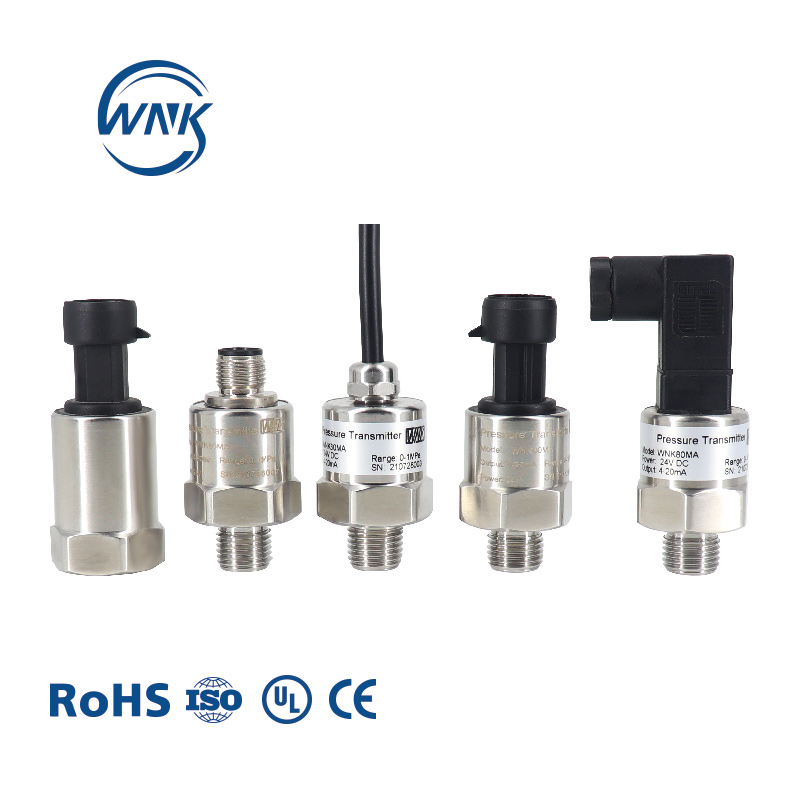
Packaged Transducers: Buying an amplified, fully packaged unit saves development time. These units arrive ready for immediate Programmable Logic Controller (PLC) integration. Specify a fully packaged Pressure Transducer for rapid project deployments.
Modern sensors support diverse electrical outputs. Your chosen technology dictates the available signal formats. Common integration options include:
Ratiometric Output: Typically 0.5V to 4.5V. It shares the power supply voltage reference, simplifying analog-to-digital conversions.
Standard Analog: Common mV/V outputs require downstream amplification, while robust 4-20mA current loops resist electrical noise over long cable runs.
Digital Interfaces: I2C digital outputs provide direct microcontroller communication, heavily favored in modern IoT hardware designs.
Deciding between these technologies requires mapping their strengths to specific operational environments. Follow these industry rules to narrow your component shortlist quickly.
Specify a Silicon Pressure Transducer when designing systems that demand ultra-high sensitivity. Medical applications rely heavily on silicon. Blood pressure monitors and respiratory equipment require rapid, minute measurements. Clean gas and air measurement systems, such as HVAC controls and cleanroom monitors, also benefit from silicon's gauge factor. Finally, specify silicon for testing applications requiring extreme high-frequency dynamic responses.
Choose ceramic when environmental ruggedness is mandatory. Industrial pneumatics and variable frequency water supply networks suffer from pressure spikes. Ceramic survives these severe water hammer effects effortlessly. Marine, chemical processing, and wastewater treatment plants expose sensors to severe corrosion. Ceramic ignores salt and acid degradation. Lastly, food, beverage, and life science sectors mandate dry, flush components. Ceramic components withstand rigorous clean-in-place hygienic chemical washes perfectly.
The choice between ceramic and silicon rarely comes down to asking which material is universally better. Instead, you must ask which failure mode is least acceptable within your system design. If your system cannot tolerate oil contamination or chemical degradation, ceramic provides the safest path. If your application demands reading minute pressure shifts dynamically, silicon remains the undisputed leader.
Your next steps require practical validation. First, calculate your required Total Error Band (TEB) across your expected temperature range. Second, audit your process media thoroughly to confirm chemical compatibility requirements. Finally, request evaluation samples or bare cells from your suppliers. Conduct rigorous bench testing to ensure the chosen technology meets your exact operational criteria before committing to mass production.
A: Yes, but it requires an expensive stainless-steel or Hastelloy isolation diaphragm combined with an internal oil fill. This significantly increases both the unit cost and the system risk.
A: They are called "dry" because they do not require any internal transmission fluid or silicone oil to transfer physical pressure to the sensing element. This completely eliminates leak risks.
A: Silicon provides much better performance for low-pressure ranges. Semiconductor materials possess high flexibility and a massive gauge factor compared to rigid ceramic.
A: They easily last for millions of cycles. Their lifespan depends heavily on peak overpressure events rather than material fatigue, as ceramic does not undergo plastic deformation during normal use.