T: +86-18156545248
E: info@wnksensor.com
E: info@wnksensor.com
5F, Bldg. 2A, Mingzhu Industrial Park Hefei 230000, China
Views: 0 Author: Site Editor Publish Time: 2026-05-13 Origin: Site
In modern hygienic processing, precise control over fluid dynamics is non-negotiable. Inaccurate pressure measurement or sudden sensor failure directly leads to catastrophic batch contamination. Facilities immediately face steep regulatory penalties and suffer from costly unplanned downtime when equipment malfunctions. Standard industrial transmitters simply cannot survive these highly demanding process environments. They quickly fail under the intense thermal shock of routine sterilization procedures. Furthermore, conventional designs completely ignore the strict physical cleanability constraints mandated in sanitary operations.
This guide provides a comprehensive technical evaluation framework. You will learn how to properly specify a Hygienic Pressure Transmitter for your specific facility needs. We cover essential physical design mandates and outline stringent CIP/SIP survival criteria. Finally, we explore advanced risk mitigation strategies tailored specifically for modern food, beverage, and pharmaceutical manufacturing lines.
Standard threaded connections create "dead legs" that harbor bacteria; a flush diaphragm pressure transmitter is mandatory to prevent material buildup and ensure cleanability.
Clean-in-Place (CIP) and Sterilize-in-Place (SIP) processes subject instruments to severe thermal shock (up to 135°C) and corrosive chemicals, requiring specialized sensing cells and high-temperature, FDA-approved fill fluids.
Proper pressure range sizing (the 50-75% rule) prevents premature sensor failure caused by pressure spikes during automated cleaning cycles.
Advanced pharmaceutical applications increasingly require dual-diaphragm monitoring systems to prevent process contamination in the event of sensor rupture.
Standard process connections pose severe contamination risks in sanitary operations. Common NPT threaded fittings contain hidden recesses. These tiny crevices create dangerous dead spaces inside the piping network. Process media like raw dairy, wood pulp, or heavy syrups easily accumulate here. Over time, this stagnant material forms a solid plug. It physically blinds the sensor from reading pressure accurately. More importantly, it breeds harmful bacteria rapidly across multiple production batches.
Traditional pressure instruments also suffer greatly from sudden thermal shock. Rapid temperature changes warp traditional Bourdon tubes instantly. They also distort standard internal mechanical components permanently. We often see instruments suffer complete accuracy loss after just one sterilization cycle. In many cases, standard sensors drift 10% to 15% off their original calibration. This drifting causes dangerous and unpredictable process variations.
Finally, standard fill fluids fail catastrophically under extreme heat. Typical industrial Pressure Transmitter models use basic glycerin. This standard fluid degrades quickly and solidifies at temperatures above 65°C. When operators expose these units to harsh SIP steam, the fluid breaks down entirely. This internal degradation destroys the sensing mechanisms. The resulting rupture compromises your entire sterile boundary.
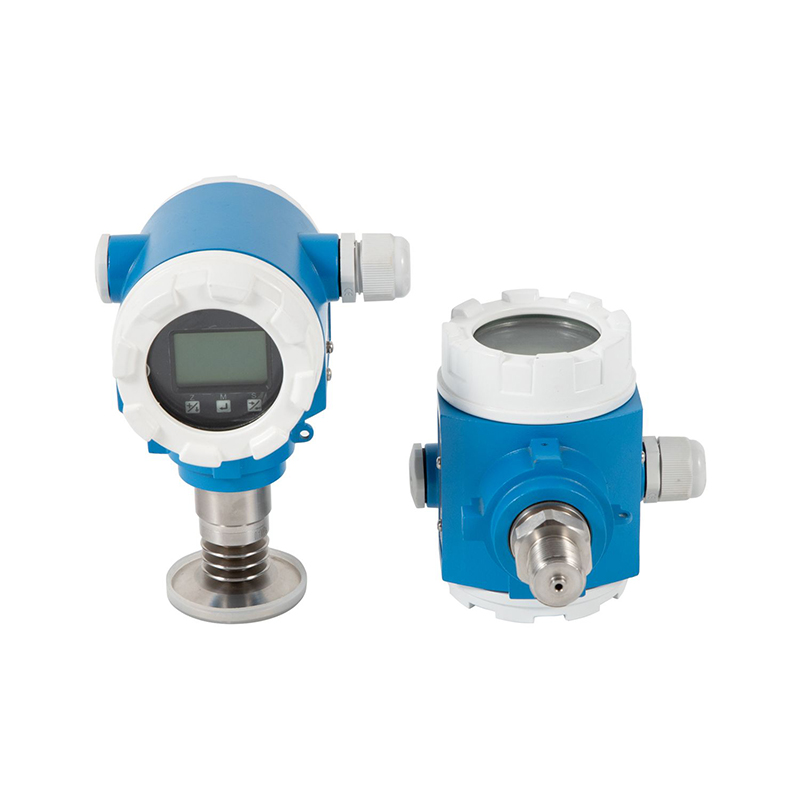
Engineers must demand strict physical characteristics for all sanitary applications. The most critical hardware feature is the sensing face itself. A Flush Diaphragm Pressure Transmitter features a sensing element welded perfectly parallel to the process wall. This seamless integration eliminates all internal crevices. Viscous or crystallizing media simply flows past the sensor unimpeded. It prevents clogging and guarantees highly reliable cleanability.
Materials and surface finishes also matter immensely in these applications. Wetted parts must utilize 316L low-carbon stainless steel exclusively. This specific metallurgical alloy prevents dangerous weld-decay corrosion over time. Furthermore, the surface roughness average (Ra) must remain strictly below 0.8 µm. This microscopic level of smoothness physically denies bacterial adhesion. It allows standard cleaning agents to sanitize the surface effortlessly.
You must also evaluate your sanitary process connections carefully. Standard aseptic fittings ensure leak-proof and biologically safe seals. Different industries favor very different standardized connections. Selecting the right connection depends heavily on your specific regional facility standards.
Tri-Clamp Connections: Provide quick connection capabilities, making them ideal for frequent line maintenance and daily inspections.
DIN 11851 Fittings: Represent a robust threaded sanitary connection widely common in the European dairy sector.
SMS 1145 Fittings: Serve as the primary Swedish standard fitting widely used throughout beverage and brewery processing.
Aseptic Flanges: Offer specialized structural integrity necessary for heavy-duty pharmaceutical bioreactors.
Sanitary environments rely heavily on automated cleaning cycles to maintain purity. We must define the process extremes these delicate instruments endure. Clean-in-Place (CIP) routinely exposes the equipment to highly aggressive chemicals. Alkaline washes typically reach temperatures of 70°C to 80°C. Acid washes follow immediately, ending with hot water rinses hitting 95°C. These mandatory steps demand incredibly high chemical resistance from the wetted parts.
Sterilize-in-Place (SIP) introduces an even harsher internal environment. It blasts the closed system with saturated steam ranging from 121°C to 135°C. This extreme heat generates massive mechanical thermal stress. As the hot steam condenses back into water, volume drops drastically. This physical change pulls a strong vacuum inside the pipe. Weak instrument diaphragms will bow outward and deform permanently under this negative pressure.
Internal sensing technologies dictate survival during these violent cycles. Manufacturers typically offer two primary sensor designs for hygienic monitoring.
Oil-Filled Sensors: They use a thin metallic membrane backed by fluid. They must utilize FDA-approved, biologically inert fill fluids exclusively. Synthetic oils like Neobee M-20 or high-temp silicones are mandatory. They remain stable during continuous exposure to SIP temperatures.
Dry Cell Sensors: These use robust ceramic or dry-silicon elements instead of oil. They operate entirely without internal transfer fluids. This dry design eliminates the risk of fluid contamination entirely. Pharmaceutical engineers highly favor them for pure API processing.
Process Extremes Summary Table | ||
Process Protocol | Peak Temperature Range | Primary Equipment Stressor |
|---|---|---|
CIP (Clean-in-Place) | 70°C - 95°C | Caustic/Acidic Chemicals, Hydraulic Water Hammer |
SIP (Sterilize-in-Place) | 121°C - 135°C | Extreme Thermal Shock, Post-Cooling Vacuum |
Modern hygienic processing demands highly advanced risk mitigation tactics. High-risk food production and active pharmaceutical ingredient (API) lines need redundant protection. Many elite facilities specify a Sanitary Pressure Transmitter featuring active dual diaphragm monitoring. This system utilizes a robust secondary internal diaphragm layer. If a rogue hard particle ruptures the primary flush face, the secondary layer holds. It keeps the process media isolated from the internal electronics. Simultaneously, it triggers a distinct electrical alarm and visual indicator. Operators identify the failure immediately without risking batch purity.
Proper calibration range sizing actively protects your hardware investment. Engineers strongly recommend following the 50-75% sizing rule. Automated CIP cycles frequently generate violent water hammer effects. Fast pneumatic valves shut in milliseconds during automated cleaning. This sudden stop sends massive hydraulic shockwaves through the piping network. To prevent overpressure damage, size the normal operating pressure correctly. It should sit comfortably between 50% and 75% of the sensor's full scale. This generous buffer absorbs unexpected pressure spikes seamlessly.
You must also proactively defend against steam condensation. Steam condensation inside the electronics housing destroys delicate circuitry fast. Implementing external cooling elements dissipates heat rapidly away from the board. You can also adjust the physical installation orientation slightly. Installing the device at a slight angle prevents liquid moisture pooling. These simple mechanical adjustments drastically improve device longevity.
Selecting the perfect instrument requires evaluating distinct performance tiers. Facility managers should map their rigorous requirements to specific product capabilities.
Tier 1: Ultra-Compact & Baseline Monitoring
These streamlined devices are ideal for standard beverage or basic dairy lines. They typically feature standard Tri-Clamp connections for extremely quick installation. They provide essential CIP compatibility for daily washes. Usually, they output standard 4-20mA analog signals or basic IO-Link digital data. Their small physical footprint fits perfectly into tight, crowded piping skids.
Tier 2: High-End Dry Cell & Digital Integration
Stringent GMP pharmaceutical manufacturing demands top-tier equipment entirely. These advanced units feature indestructible dry-cell ceramic technology. They carry rugged IP69K washdown ratings protecting them against high-pressure, high-temperature sprays. They also support advanced digital protocols like HART or Foundation Fieldbus networks. This deep digital integration empowers sophisticated predictive maintenance algorithms.
Sanitary Transmitter Selection Chart | ||
Feature Category | Tier 1: Beverage & Dairy Focus | Tier 2: GMP Pharma Focus |
|---|---|---|
Primary Sensing Element | Oil-Filled (Neobee M-20 Approved) | Dry Cell Ceramic or Silicon |
Diagnostic Data Output | 4-20mA / Standard IO-Link | HART / Foundation Fieldbus |
Ingress Protection Rating | IP67 (Standard Washdown) | IP69K (High-Pressure Steam Spray) |
Finally, you must rigorously verify all industry compliance documents. Ensure your shortlisted models carry verifiable regional certifications before purchasing. Look explicitly for valid 3-A Sanitary Standards stamps for US operations. European facilities should demand strict EHEDG design guidelines compliance. Moreover, carefully audit their FDA material compliance certificates regarding elastomers and oils. Missing these certifications invites immediate and severe regulatory action.
Upgrading to a purpose-built sanitary measurement device represents a strategic operational necessity. It goes far beyond simply measuring line pressure accurately. This upgrade actively protects your valuable batch integrity from hidden microbial contamination. It guarantees your facility maintains strict regulatory compliance effortlessly. Furthermore, it completely eliminates frustrating maintenance bottlenecks originally caused by media clogging or unexpected thermal failure.
Your engineering team should take immediate, concrete action today. First, aggressively audit all your current process connections for hidden dead legs. Next, accurately document the absolute peak SIP temperatures your sterilization lines reach. Finally, consult directly with specialized instrumentation experts. They will help you specify the optimal diaphragm material, safe fill fluid, and ideal digital output configuration for your exact process.
A: CIP cleans automated systems internally without requiring disassembly. SIP sterilizes equipment in-line using highly pressurized, high-temperature steam. Autoclaving requires completely detaching the instrument from the process line. You place it inside a high-pressure steam chamber, typically running at 121°C at 15 psi. Your instruments must carry specific ratings for your chosen sterilization method.
A: No. Even in fully sealed units, standard fluids like basic glycerin chemically degrade at typical SIP temperatures above 65°C. This degradation ruins the sensor mechanism completely. Furthermore, in the event of an accidental foil rupture, only FDA-approved fluids are biologically safe for direct process contact.
A: Post-CIP sensor drift typically results from intense thermal shock. Rapid temperature changes permanently warp the internal metallic sensing element. Alternatively, the transmitter’s pressure range might be too narrow. It simply cannot handle the severe hydraulic spikes and water hammer effects that occur when automated CIP valves open and close rapidly.