T: +86-18156545248
E: info@wnksensor.com
E: info@wnksensor.com
5F, Bldg. 2A, Mingzhu Industrial Park Hefei 230000, China
Views: 0 Author: Site Editor Publish Time: 2026-07-29 Origin: Site
Incorrect sensor specification in refrigeration systems causes serious operational headaches. It directly leads to media leaks, phantom pressure readings, and catastrophic system downtime. Engineers can no longer rely on old habits. The HVAC industry is rapidly transitioning to low-GWP (Global Warming Potential) and natural refrigerants. Consequently, historical baseline specifications are no longer universally safe. A mismatch here threatens both equipment integrity and strict environmental compliance.
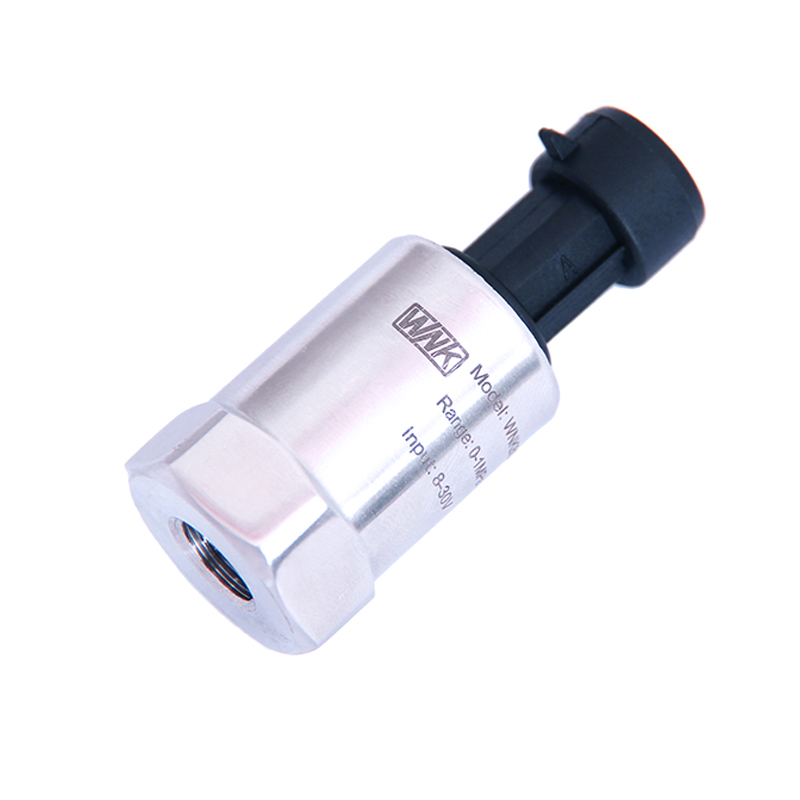
This guide provides an evidence-based framework for evaluating and selecting a Refrigeration Pressure Transducer. We will focus deeply on wetted material compatibility. You will also learn how to assess mechanical resilience and ensure seamless electrical integration. Proper specification prevents premature sensor failure and protects vital cooling assets. By the end, you will know exactly how to align your sensor choices with modern refrigerants. We will give you the tools to evaluate vendors and minimize field replacements effectively.
Media Dictates Material: Ammonia (R-717) strictly requires 316L stainless steel; traditional brass or copper components will fail rapidly due to corrosion.
Pressure Dynamics: CO2 (R-744) systems demand transducers with exceptionally high proof and burst pressure ratings compared to traditional HFC systems.
Seal Integrity: Hermetically sealed, fully welded pressure transducers present a lower risk of refrigerant leakage over time compared to O-ring internal seals.
Vibration and Moisture: HVAC pressure transducers must feature high IP ratings (IP67/IP69K) and vibration resistance to survive real-world compressor environments.
Incompatible refrigerants relentlessly attack sensor diaphragms. They chemically degrade internal seals over time. We often see engineers focus only on the refrigerant gas itself. However, synthetic compressor oils cause equal damage. POE, PVE, and PAG oils feature aggressive chemical profiles. They rapidly swell or embrittle standard elastomer O-rings. When the seal fails, the sensor loses integrity. The resulting chemical attack eats through internal electronics. This leads to immediate failure and system lockout.
A breached sensor housing creates a severe liability. Environmental agencies heavily regulate refrigerant leaks. Organizations face massive EPA and F-Gas penalties for venting refrigerants into the atmosphere. Natural refrigerants introduce additional dangers. Leaking ammonia creates acute toxic hazards for plant personnel. Leaking propane introduces severe flammability risks. A single failed Pressure Transducer can trigger facility evacuations. You must view sensor housings as critical pressure vessels.
Degraded sensors do not always fail immediately. Often, they slowly lose calibration. This phenomenon causes signal drift. A drifting sensor feeds inaccurate data to the PLC. The controller responds by forcing compressors to overwork. It might lower suction pressure targets unnecessarily. This drives up daily energy costs significantly. System efficiency plummets when control logic relies on corrupted data. Overworked compressors also suffer premature mechanical wear.
You must establish clear success criteria for sensor deployment. A successful installation balances initial component cost against a verifiable lifecycle rating. You want to minimize field-replacement labor entirely. Replacing a failed sensor requires system evacuation, recovery, and recharging. The labor hours far exceed the purchase price of the sensor itself. Focus on rugged, application-specific designs. They provide long-term stability and reduce unexpected maintenance trips.
Matching the wetted material to the refrigerant is non-negotiable. The wetted parts include the port, the diaphragm, and any internal seals exposed to the media. We classify compatibility requirements based on the three dominant refrigerant families used today.
These traditional refrigerants offer broad material compatibility. They generally work well with brass, copper, and standard stainless steel ports. However, you must apply a specific evaluation lens here. Your focus must shift to the compressor oil. Modern low-GWP systems use highly synthetic oils. If your sensor uses internal elastomer seals, you must verify oil compatibility. Standard Neoprene might degrade. Always check if the specific POE or PVE oil attacks the O-ring material.
Ammonia presents extreme metallurgical challenges. You face a high risk of catastrophic failure if you expose it to copper, brass, or bronze. Ammonia aggressively corrodes these yellow metals. It dissolves them in a matter of hours or days. The strict requirement here is 316L or 304 stainless steel for all wetted parts. You cannot compromise on this standard. Industrial ammonia plants strictly audit components for compliance.
Carbon dioxide operates at extreme pressures. R-744 systems utilize a transcritical cycle. The operating pressures easily exceed 120 bar (1740 psi). Traditional sensors cannot survive this stress. The strict requirement dictates heavy-duty machined sensing elements. Refrigerant Pressure Transducer designs for CO2 must utilize high-strength steel alloys. Standard burst ratings for HFCs fall dangerously short for CO2 applications.
Refrigerant Family | Examples | Compatible Metals | Incompatible Metals | Key Operational Threat |
|---|---|---|---|---|
HFC, HCFC, HFO | R-410A, R-32, R-454B | Brass, Copper, Stainless Steel | None typically | Synthetic Oil (POE/PAG) attacking O-rings |
Ammonia | R-717 | 316L or 304 Stainless Steel | Copper, Brass, Bronze | Rapid corrosive attack on yellow metals |
Carbon Dioxide | R-744 | High-strength Stainless Steel | Standard light-duty alloys | Extreme transcritical operating pressures |
You must evaluate the core sensing technology. MEMS piezoresistive and thin-film technologies dominate the market. MEMS offers excellent accuracy and signal strength. It handles wide temperature fluctuations smoothly. Thin-film technology features a fused molecular structure. This makes it incredibly durable against extreme pressure spikes. Thin-film sensors typically lack internal fluid fill. This eliminates the risk of silicone oil leaking into the refrigerant stream if the diaphragm ruptures.
The internal sealing mechanism dictates long-term reliability. We strongly advocate for welded constructions in severe duty cycles.
The Case for Welded: Fully welded, hermetically sealed sensors eliminate the O-ring entirely. This removes the weakest point of failure. It proves ideal for high-vibration compressor racks where mechanical stress causes O-rings to unseat.
The Case for O-Rings (Neoprene/HNBR): O-ring designs remain acceptable for lower-tier commercial applications. They cost less to manufacture. However, you must verify oil compatibility rigorously before deploying them.
Nominal pressure ranges only tell half the story. You must define the necessary proof pressure and burst pressure. Proof pressure is the maximum pressure a sensor survives without shifting its calibration zero-point. It typically requires a 2x operating rating. Burst pressure defines the point of catastrophic mechanical rupture. It typically demands a 3x to 5x rating. High ratings protect the sensor from liquid hammer. They also prevent catastrophic failure during sudden valve-closure anomalies.
Moisture kills electronics quickly. Condensation constantly forms on sweating suction pipes. Chillers endure brutal freeze-thaw cycles daily. You must mandate high IP ratings. IP67 protects against temporary submersion. IP69K withstands high-pressure, high-temperature washdowns. Strong ingress protection prevents moisture from traveling down the cable bundle. It seals the internal PCB from atmospheric humidity. Ignoring this criterion guarantees short-circuit failures in humid environments.
Choosing the correct electrical output prevents signal degradation. Your choice depends heavily on the system architecture. Controllers require clean, reliable data to modulate expansion valves accurately.
Ratiometric (0.5 to 4.5V): This signal scales proportionally with the supply voltage. It proves ideal for OEM integrations. Use it when you have short cable runs and stable 5V power supplies. Microprocessors read it easily.
Current Loop (4-20mA): Industrial plants rely on this standard. It excels in large industrial refrigeration plants requiring long cable runs. Current loops offer high electromagnetic interference (EMI) immunity. They do not suffer from voltage drop over distance.
Voltage (0-10V): This provides legacy compatibility. Specific older HVAC controllers still demand it. However, it remains highly susceptible to voltage drop and external noise.
Compressor rooms generate massive electrical noise. Variable frequency drives (VFDs) and large compressor motors create intense electromagnetic interference (EMI). An unshielded HVAC Pressure Transducer acts like an antenna. It picks up this noise and distorts the pressure signal. You must evaluate the sensor's EMC (Electromagnetic Compatibility) resilience. Look for sensors built with internal RF filtering. Verify they meet rigorous CE standards for industrial electrical noise rejection. Proper cable shielding practices also remain critical during field installation.
Technicians often cause self-inflicted failures during installation. Over-torquing the sensor body distorts the internal diaphragm. This physical distortion permanently shifts the sensor's zero-point. It makes the sensor read a false positive pressure when empty.
Mitigation: Select sensors built with robust hex designs. Avoid thin-walled brass ports. Always mandate clear torque specifications in your installation manuals. Train technicians to use a backup wrench on the fitting, not just the sensor housing.
Compressor discharge lines experience violent pressure pulsations. Sudden solenoid valve closures cause immediate pressure spikes known as liquid hammer. These forces cause micro-fatigue on the sensing diaphragm over time.
Mitigation: Specify integrated pressure snubbers. A snubber acts as a mechanical restrictor. It dampens the sudden wave of force before it hits the diaphragm. Many premium sensors include tiny snubber orifices built directly into the port.
Procurement teams need structured criteria. Use this checklist to shortlist potential sensor partners effectively:
Media Compatibility Data: Do they provide transparent compatibility charts? They must cover both modern refrigerants and synthetic compressor oils.
Compliance Documentation: Can they supply required safety certifications? Demand UL, CE, and RoHS compliance documentation upfront.
Supply Chain Agility: What is the standard lead time? Ask about custom pressure ranges. Verify availability for specific thread connections, such as 1/4" NPT versus 7/16-20 UNF flare fittings.
Selecting a refrigerant pressure transducer remains an essential exercise in risk mitigation. You cannot cut corners on material science. Aligning the wetted materials with the specific refrigerant is absolutely non-negotiable. Ammonia and CO2 applications leave zero room for error. Welded stainless steel designs provide the highest security against leaks. Robust electrical outputs ensure your control systems operate efficiently without interference.
Your next action requires direct communication with your engineering team. Consult with technical support to cross-reference your specific refrigerant profile. Gather data on the exact compressor oil and the expected system pressure profile. Compare this data rigorously against available sensor data sheets. Do this carefully before placing any volume OEM order. A methodical approach guarantees safety and system longevity.
A: No. Standard transducers rarely have the correct elastomer seals to withstand synthetic compressor oils. They also do not typically meet the high burst pressure requirements demanded by refrigerant safety standards. Using standard sensors invites chemical degradation and dangerous media leaks.
A: A switch provides a simple on/off binary signal at a predetermined pressure threshold. Engineers use switches for hard safety cutoffs. A transducer provides a continuous, real-time pressure measurement to the controller. This allows for variable system modulation and precise valve control.
A: Drift happens for several reasons. It can be caused by micro-fatigue on the sensing diaphragm from intense pressure pulsation. Moisture ingress might be affecting the internal electronics. Alternatively, chemical degradation of the internal seal can alter the physical stress on the sensing element.
A: It is highly recommended for sensors mounted directly near the compressor discharge line. A snubber restricts flow slightly. This dampens the severe pressure pulsations and sudden spikes. It effectively prevents premature sensor fatigue and extends the component's lifespan.